Pro Forma Income Statement Template: A Practical Tool for Financial Forecasting
The Pro Forma Income Statement Template is a valuable resource for businesses looking to project their financial performance over a specific period. Designed with clarity and functionality in mind, this tool helps users estimate revenue, costs, and net income, offering a structured approach to financial planning. Whether you're a startup founder, an investor, or a business manager, the template provides a professional framework for evaluating future financial outcomes.
Understanding the Pro Forma Income Statement Template
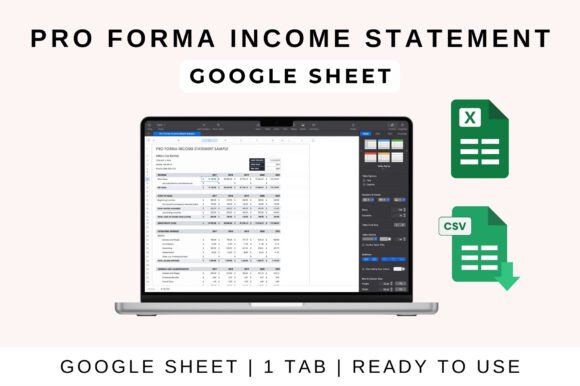
A pro forma income statement is a financial projection that outlines expected revenues and expenses for a given time frame. The Pro Forma Income Statement Template simplifies this process by offering a pre-built structure that includes key sections such as gross profit, operating income, and projected earnings. This makes it easier for users to track financial trends and make informed decisions.
Unlike traditional financial statements, which reflect past performance, a pro forma income statement is forward-looking. It allows businesses to model different scenarios, test assumptions, and identify potential challenges before they arise. This proactive approach can be especially beneficial for startups and growing companies that need to plan for expansion, secure funding, or manage cash flow effectively.
Key Features of the Template
The Pro Forma Income Statement Template comes with several features that enhance its usability and reliability. One of the most notable aspects is the built-in formulas that automatically calculate totals, gross profit, and net income. This reduces the risk of manual errors and saves time, allowing users to focus on analysis rather than data entry.
The template also includes clearly defined sections that guide users through the input process. Categories such as sales revenue, cost of goods sold, operating expenses, and taxes are organized logically, making it easy to navigate and update. This structure ensures consistency across different versions of the statement, which is essential for comparing results over time or between departments.
Another advantage is the flexibility of the template. It works seamlessly in Google Sheets, Excel, and Numbers, giving users the freedom to choose their preferred platform. This compatibility ensures that teams can collaborate efficiently, share updates in real-time, and maintain a unified financial outlook.
Practical Applications and Use Cases
The Pro Forma Income Statement Template is particularly useful for businesses engaged in strategic planning. Startups can use it to outline their financial goals and demonstrate viability to potential investors. For example, a new e-commerce business might use the template to project monthly revenue based on expected traffic, conversion rates, and average order value. This helps in setting realistic targets and identifying areas where adjustments may be needed.
Investors and financial analysts also benefit from using the template when evaluating a company’s potential. By reviewing the projected income statement, they can assess the company's ability to generate profits, manage costs, and sustain growth. This information is critical when making investment decisions or providing guidance to business owners.
Additionally, the template supports internal reviews and budgeting processes. Managers can use it to forecast departmental expenses, allocate resources, and monitor performance against projections. This level of insight helps organizations stay agile and responsive to market changes.
Strengths and Limitations
The Pro Forma Income Statement Template excels in simplicity and efficiency. Its user-friendly layout makes it accessible to individuals with varying levels of financial expertise. The auto-calculation feature ensures accuracy, while the customizable options allow for personalization based on specific business needs.
However, the effectiveness of the template depends on the quality of the data entered. If assumptions are unrealistic or incomplete, the projections may not reflect actual outcomes. Users must exercise caution and validate their inputs with historical data, market research, and expert opinions whenever possible.
Another consideration is that the template is best suited for short-term forecasting. While it can provide a general overview of future performance, it may not account for long-term variables such as economic shifts, regulatory changes, or technological disruptions. Businesses should complement the template with other tools and strategies for comprehensive financial planning.
Who Benefits Most from the Template?
The Pro Forma Income Statement Template is ideal for entrepreneurs and small business owners who need a reliable way to track financial progress. It is especially helpful during funding rounds, where clear and concise financial projections are essential for securing loans or investments. The template also supports internal decision-making by providing a visual representation of expected income and expenses.
Marketing professionals and creators can use the template to evaluate the financial impact of campaigns, product launches, or content strategies. For instance, a digital marketing agency might project revenue based on client acquisition rates and service pricing, helping them set realistic goals and allocate resources effectively.
Freelancers and independent contractors can also benefit from the template by tracking income and expenses related to their projects. This helps in managing cash flow, setting rates, and preparing for tax obligations. The ability to customize the template ensures that it adapts to different business models and financial structures.
Best Practices for Using the Template
To maximize the value of the Pro Forma Income Statement Template, users should start by defining clear objectives. Are you projecting quarterly results? Planning for a new product launch? Understanding the purpose of the forecast will help you structure the data accurately and prioritize relevant metrics.
It’s also important to review and update the template regularly. Market conditions, business strategies, and financial goals can change over time, so the projections should reflect these developments. Regular reviews ensure that the template remains a useful tool for ongoing planning and decision-making.
Collaboration is another key factor. Sharing the template with team members or financial advisors can provide additional insights and improve the accuracy of the projections. Real-time updates and feedback loops help refine assumptions and align expectations across the organization.
Finally, consider integrating the template with other financial tools and software. Combining it with budgeting platforms, accounting systems, or analytics dashboards can create a more holistic view of the business’s financial health. This integration enhances the overall effectiveness of the pro forma income statement as a strategic planning tool.